
IMPORTANT INFORMATION
For those interested in the ecological survey, registration will be available on November 20th and 21st at the On-site Registration location (Shantou White Swan Hotel on Nov. 20 and Shantou International Convention & Exhibition Center on Nov. 21). For specific details, please inquire at the registration.
Cultural and Ecological Field Survey for the 24th Pacific Science Congress
Date: November 24, 2025
8:00 Departure from Shantou White Swan Hotel (picking up participants from designated downtown hotels)
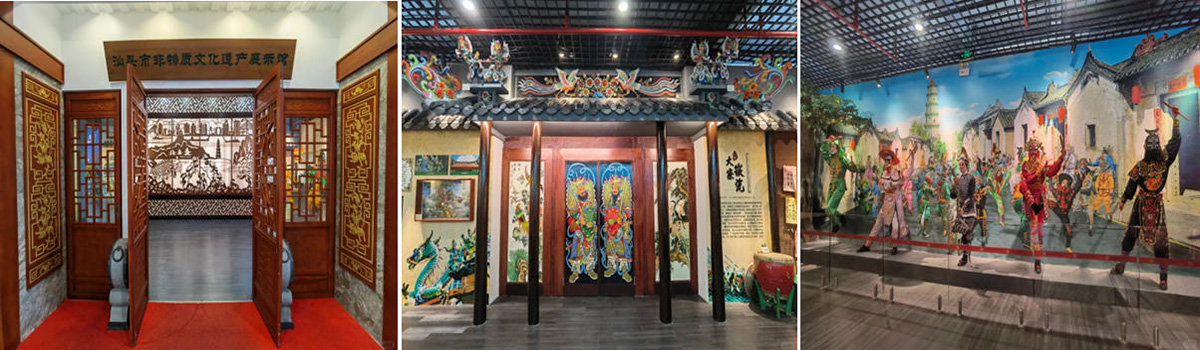
9:00–10:00 Shantou Intangible Cultural Heritage Exhibition Hall
Located on the second to fourth floors of the main building of the Cultural Center, with an area of over 1,200 square meters, it is Guangdong Province’s first municipal-level intangible cultural heritage exhibition hall. The hall is functionally divided into dynamic, static, and theatrical exhibition zones, showcasing 73 intangible cultural heritage projects at the municipal level or above. Among these, 13 are listed in the National Intangible Cultural Heritage List, and 38 are included in the Provincial Intangible Cultural Heritage List.
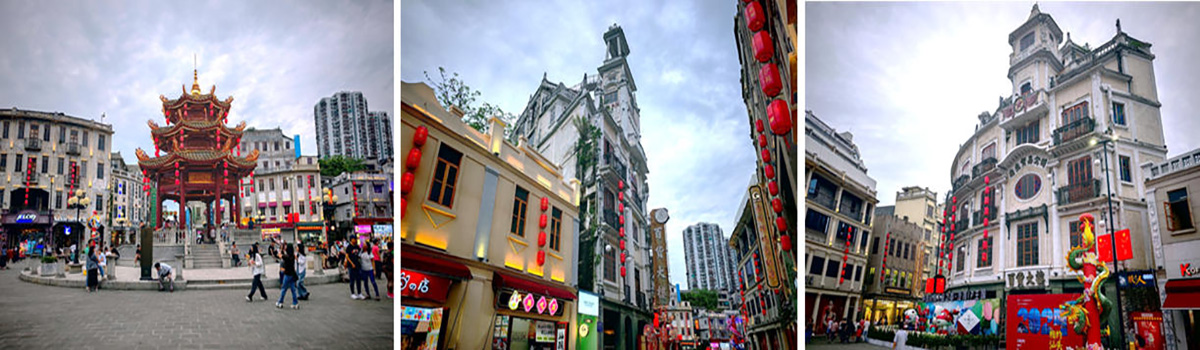
10:10 - 11:00 Shantou Little Park District
Little Park District is an old neighborhood in Shantou steeped in profound historical and cultural heritage. As a landmark of Shantou’s port-opening culture, it bears witness to the city’s commercial prosperity throughout history. The area clusters historical buildings from the late Qing Dynasty and Republican eras, including government offices, foreign trading houses, and consulates, such as the Sun Yat-sen Memorial Pavilion and the Department Store. It also gathers numerous time-honored ChaoShan cuisines and authentic local snacks.
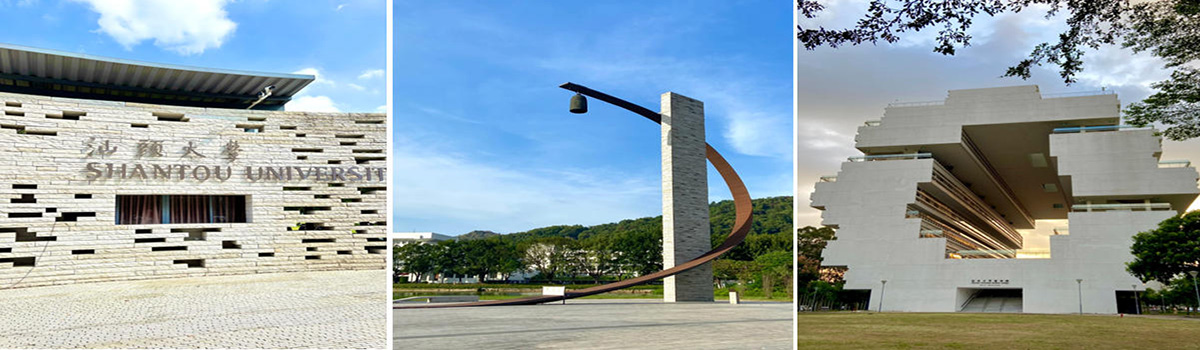
11:30–12:20 Shantou University Sangpu Campus
Shantou University serves as the host institution for this conference. Established in 1981, it is a higher education institution jointly funded by the Ministry of Education of the People’s Republic of China, Guangdong Province, and the Li Ka Shing Foundation, and is designated as a university with national key disciplines in Guangdong’s high-level university initiative. In the 2026 World University Rankings, it tied for 71st among mainland Chinese institutions, with 13 disciplines ranking in the top 1% globally in the ESI rankings. The elegant architecture of Shantou University’s Sangpu Campus—from the main gate, Truth Bell Plaza, the Medical School building, library, to the sports complex—each bears the signature of a master architect, earning it the reputation as “a masterpiece of architectural art in Chinese higher education”.
12:30–13:00 Lunch (Shantou University)
13:10–14:30 Transfer to Nanao Island
Nanao, a national ecological demonstration zone, was named “Guangdong’s Most Beautiful Island” by National Geographic. Comprising the main island and 36 surrounding islets, it spans a total area of 115.054 square kilometers, including 112.049 square kilometers for the main island and 4,600 square kilometers of surrounding waters. The main island is crossed by The Tropic of Cancer , making it Guangdong’s closest point to Taiwan Province. The island features a subtropical maritime monsoon climate, with 78.05% forest coverage and 115 ancient trees. It possesses 50,000 square kilometers of exploitable fishing grounds, home to over 1,300 species of fish, shrimp, shellfish, and algae. The area shelters nationally protected wildlife such as the Chinese white dolphin and green sea turtle, along with 116 species of birds
14:30–15:00 Guangdong Nanpeng Islands Marine Ecological National Nature Reserve Administration
The Nanpeng Islands Marine Ecology National Nature Reserve is situated in the vast expanse of sea where the northeastern end of the South China Sea meets the southwestern end of the Taiwan Strait. The unique hydro-climatic conditions and extraordinary seabed topography feature numerous islands and scattered reefs that remain in their pristine natural state. Its primary conservation targets include unique natural underwater landforms and nearshore marine ecosystems, important rare and endangered marine animals and fishery species along with their habitats, and rich marine biodiversity.
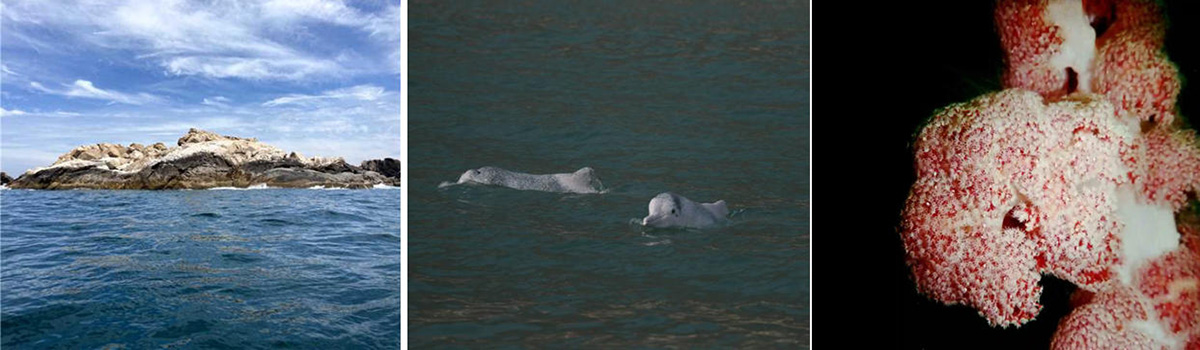
15:40–16:10 Qingao Bay
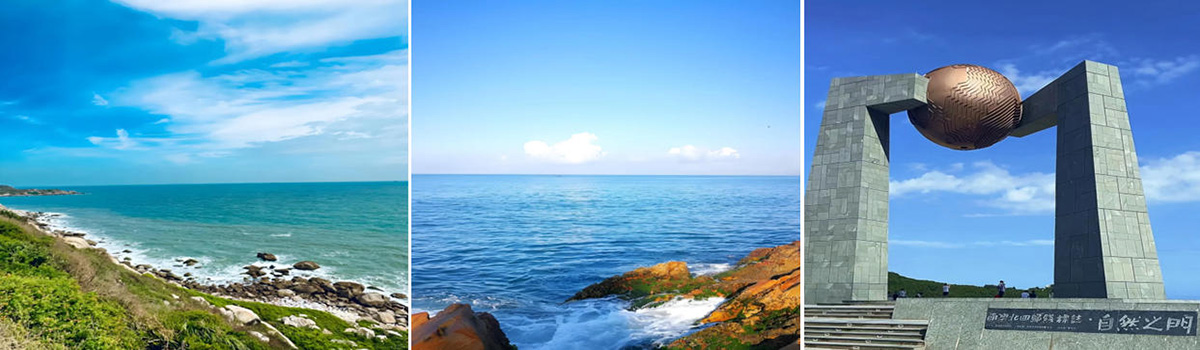
Qing’ao Bay, situated within the Dongshan-Nan’ao Marine Biodiversity Conservation and Management Demonstration Zone, serves as a habitat for numerous nationally protected rare marine wildlife, including the Chinese white dolphin. It is also functions as a vital stopover for rare migratory seabirds such as the rock heron and brown-winged tern. Additionally, it is designated as one of China’s national marine parks. The bay forms a crescent shape, stretching 2.4 kilometers in length. Its beaches average 60 meters in width, featuring a flat, expansive shoreline with fine white sand. The waters are clear and turquoise, free from silt, pollution, and rough waves. This is the earliest location in Guangdong Province to greet the sunrise. The Tropic of Cancer Monument, “Gateway to Nature”, stands as Qing’ao Bay’s iconic landmark and is the 11th such monument constructed in China.
16:30–17:00 Former General’s Headquarters on Nanao Island
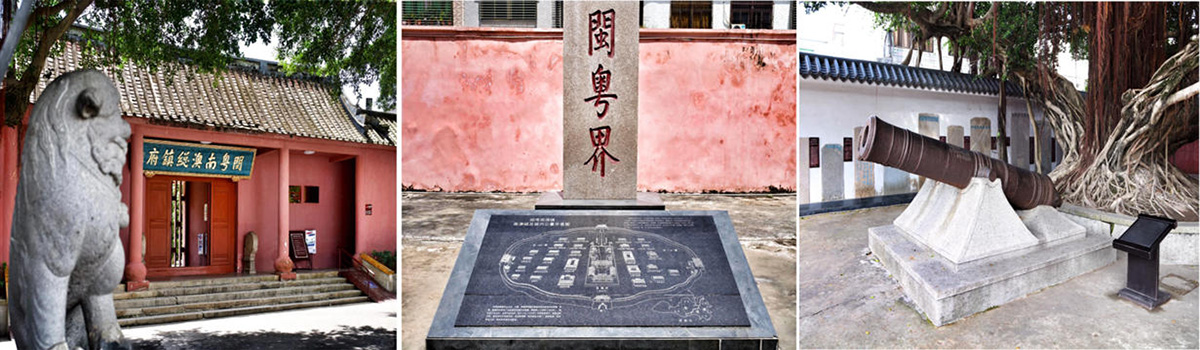
The Former General’s Headquarters on Nan’ao Island, formally known as the “Fujian-Guangdong Nan’ao General Command Headquarters,” is the only island-based general command headquarters in the nation. Strategically positioned at the southeastern coastal crossroads between eastern Guangdong and southern Fujian, Nan’ao Island held significant military importance. In the third year of the Wanli reign of the Ming Dynasty (1575), the Nan’ao Commandery was established with a deputy commander-in-chief appointed to oversee the naval forces of Fujian and Guangdong. Over 170 commanders-in-chief and deputy commanders-in-chief served here during the Ming and Qing dynasties. Remnants such as the “Zheng Chenggong Recruitment Tree” and the “Troop Inspection Stone” are still preserved within the compound. It also houses the “Historical Exhibition of the Fujian-Guangdong Nanao Garrison Commandant,” showcasing calligraphic inscriptions and steles by renowned figures from the Ming and Qing dynasties. Among these, the most valuable artifacts are steles documenting port agreements and customs regulations. Additionally, it displays one 8,000-jin and one 6,000-jin cannon, both manufactured during the Opium War for use against British forces.
End of itinerary. Return to the starting point (Shantou White Swan Hotel).
Estimated time of arrival: 6:00 PM at Shantou White Swan Hotel, with transfers provided to relevant downtown hotels along the route.
Note: The itinerary for the ecological field survey may be subject to adjustments depending on specific circumstances.